
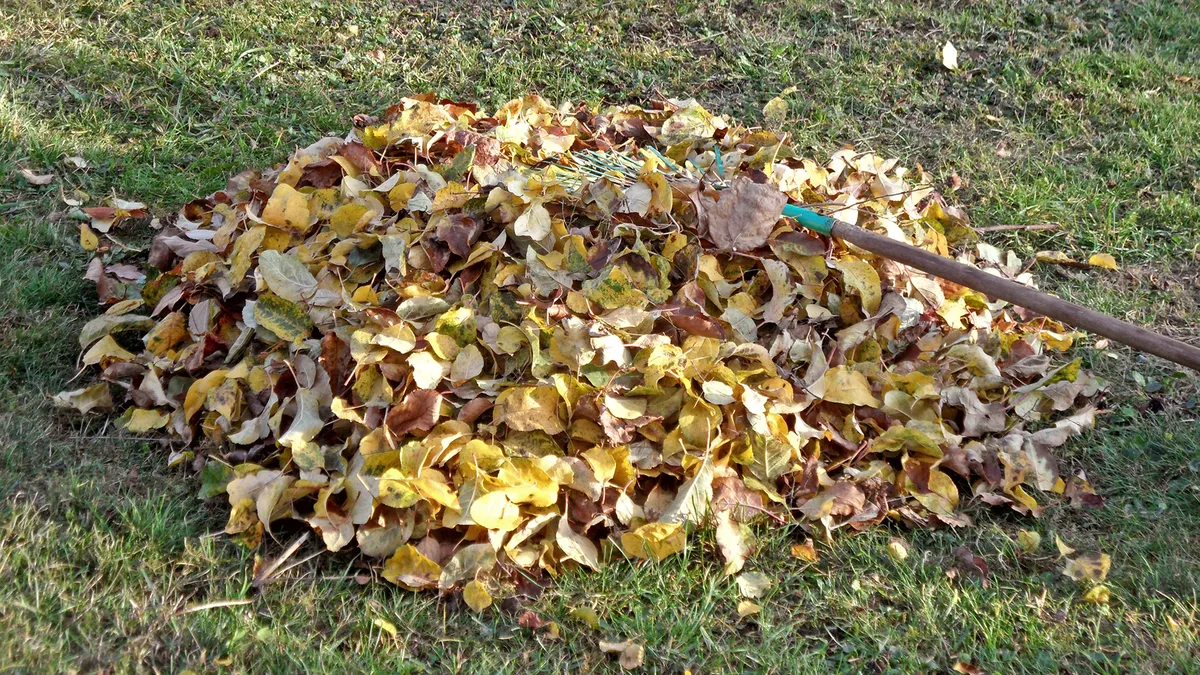
Bromley is one of London's leafiest boroughs, and from October to December our lawns disappear under a carpet of oak, plane, beech and sycamore leaves. A few are nothing to worry about, but a thick layer left for weeks can do real damage. The good news is that those same leaves are one of the best free things your garden gets all year.
Why you shouldn't leave leaves on the lawn
Grass still needs light in autumn and winter. A wet, matted layer of leaves blocks that light and holds moisture against the grass, so it turns yellow, weakens and becomes an easy target for moss and fungal disease. Leave it for a few weeks and you can be left with bare patches in spring.
Wet leaves on paths, steps and patios are also slippery, which matters even more for older relatives and visitors.
How often to clear them
Little and often is easiest. Once a week while the leaves are falling stops them matting down, and it is much quicker than one big clear-up in December. Choose a dry day if you can, as dry leaves are lighter and rake up cleanly.
A spring-tine lawn rake or a leaf blower both work. On a dry day you can also run the mower over the leaves on a high setting: it chops them up and collects them in the grass box, half-mixed with clippings, which is perfect for the compost heap.
Leave some for wildlife
You don't need a perfectly bare garden. Sweep the leaves off the lawn and paths, then tuck some under hedges, at the back of borders or beneath shrubs. They protect the soil, slowly feed it, and give hedgehogs, frogs, beetles and overwintering insects somewhere to shelter.
Turn them into free leaf mould
Leaf mould is dark, crumbly and full of goodness. It improves any soil, from heavy Bromley clay to the sandy soils around Hayes and Keston. Making it could hardly be easier:
- Collect the leaves while they're damp. If they've dried out, give them a quick soak.
- Bag them up. Pack them into old compost or black bin bags, tie the top and poke a few holes in the sides with a garden fork.
- Or build a simple cage from four stakes and chicken wire if you have a lot of leaves.
- Leave them somewhere shady and forget about them. Give the bags a shake now and then.
- Use it as a mulch after about a year, or wait two years for a fine, crumbly mould you can mix into potting compost.
Most leaves work well, especially oak, beech and hornbeam. Thick evergreen leaves such as holly and laurel take years to rot, so shred them or add them to the compost heap instead. Leaves from roses with black spot are best put in the green waste bin rather than recycled around the garden.
Don't forget gutters, drains and ponds
Leaves block gutters and outside drains, which leads to overflowing water and damp walls. Check them once most leaves have fallen. If you have a pond, a net over it in autumn stops leaves sinking and rotting in the water.
Please don't burn them
Burning damp leaves makes a lot of smoke, annoys neighbours and can harm any animals sheltering in the pile. They are far more useful turned into leaf mould, or taken away in your garden waste collection.
Common questions
Is it bad to leave leaves on the grass over winter?
Yes. A thick layer blocks light and keeps the grass wet, which can leave yellow or bare patches and encourage moss. Clear the lawn every week or so while the leaves are falling.
How long does leaf mould take?
About a year for a rough mould you can use as a mulch, and around two years for a fine, crumbly mould for potting mixes.
Can I put leaves in my garden waste bin?
Yes, but it is worth keeping some to make leaf mould. It's free, and one of the best soil improvers you can get.
Photo credits
- Leaves on your lawn: when to clear them and how to make free leaf mould: photo by onnola from Berlin / Koblenz (Germany) (CC BY-SA 2.0), via Wikimedia Commons, resized