
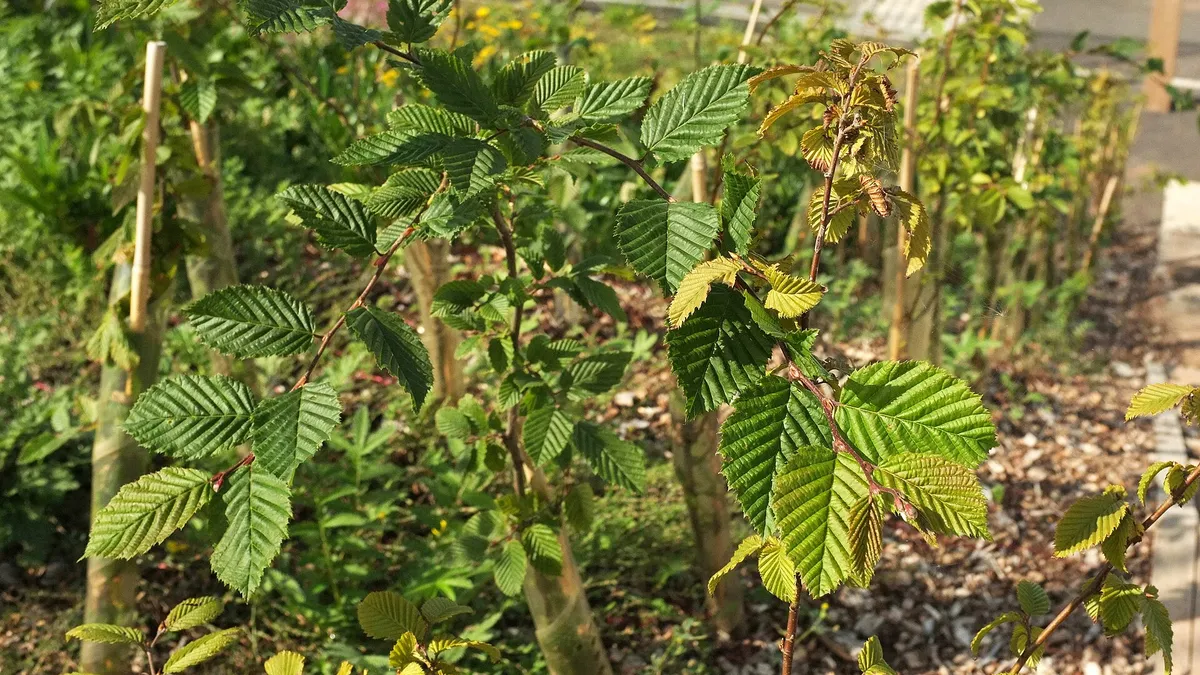
If you have been thinking about a new hedge for privacy, shelter or wildlife, now is the time to plan it. From late autumn to the end of winter, hedge plants are sold bare-root: lifted from the nursery field while they are dormant, with no pot and no compost. They cost much less than pot-grown plants, establish well, and a row of small whips planted this winter can become a proper hedge in a few years.
Why plant a hedge in winter?
Deciduous hedge plants such as beech, hornbeam and hawthorn are best planted between mid-autumn and late winter, while they are dormant. Evergreens such as yew, box and privet can go in any time from late autumn to late winter, according to the RHS.
While the plants are dormant they are not trying to support leaves, so they can put their energy into new roots as the soil warms in spring. Bare-root hedging is also far cheaper than pot-grown plants, which matters when you need several plants for every metre of hedge.
The one rule is to plant only when the soil can be worked. If the ground is frozen solid or waterlogged, wait for a better week.
Choosing the right hedge for your garden
Think about what you want the hedge to do before you order:
- Beech and hornbeam make neat, formal hedges. Both often hold their brown leaves through winter when kept clipped, so you keep some screening all year. Hornbeam copes better with heavy, wet clay, which is common across much of Bromley.
- Hawthorn is tough, fast and thorny, ideal for a boundary and excellent for wildlife, with blossom in spring and berries in autumn.
- A mixed native hedge of hawthorn, blackthorn, hazel, field maple and dog rose is the best choice for birds, insects and hedgehogs.
- Yew is slow to start but makes a dense, dark green, long-lived hedge. Privet is quicker and evergreen or semi-evergreen.
- Leyland cypress grows very fast but needs regular trimming to stay under control, so think carefully before planting it next to a neighbour.
Not sure what your soil is like? Our guide to soil types will help you work it out.
Prepare the ground
Good preparation makes the biggest difference. The RHS suggests digging over a strip 60 to 90cm (2 to 3ft) wide along the line of the hedge, one spade's depth, and clearing every weed, especially perennial ones such as bindweed and couch grass.
On heavy clay or very sandy soil, fork organic matter such as well-rotted compost into the top of the soil. Don't put a layer of compost in the bottom of the trench, as it rots down and the plants sink. If the ground stays waterlogged, plant along a low raised ridge instead.
For a boundary hedge, set the row back about 90cm (3ft) from the boundary line so it has room to grow without spilling over.
How to plant bare-root hedging
- Keep the roots damp. Bare roots dry out quickly in wind and sun. Keep them wrapped until the moment you plant, and soak them in a bucket of water for a short while before planting if they look dry.
- Space the plants. The RHS recommends 30 to 60cm (1 to 2ft) apart in a single row, depending on the plant and how big you want the hedge. For a thick hedge, plant a staggered double row with the rows 45cm (18in) apart.
- Plant at the right depth. Look for the point where the roots flare out from the stem, sometimes shown by a soil mark. That point should sit level with the soil surface.
- Spread the roots and firm in. Trim any broken roots, spread the rest out in the trench, work soil between them and firm it gently with your heel so there are no air pockets.
- Water and mulch. Water well if the soil is dry, then spread a mulch about 7.5cm (3in) deep along the row to keep weeds down and hold in moisture.
Can't plant straight away? Keep the bundle somewhere cool and frost-free with the roots wrapped in damp material, or "heel them in" by laying them in a shallow trench in a spare bit of ground and covering the roots with soil until you are ready.
Aftercare for the first two years
New hedges need watering in dry spells for their first two years, particularly in spring and summer. Keep a strip about 45cm (18in) either side of the hedge free of weeds and grass, which compete for water, and top up the mulch each year.
Most new hedges need pruning after planting and light, regular trimming once established to make them bushy from the base. Expect a hedge to take roughly three to seven years to reach its full size, depending on the plants you choose.
When it comes to trimming, avoid cutting hedges during the main bird nesting season, which the RHS says generally runs from March to August. Active nests are protected by law.
Common questions
When is the best time to plant a hedge?
For bare-root deciduous hedging such as beech, hornbeam and hawthorn, plant from mid-autumn to late winter while the plants are dormant. Avoid days when the ground is frozen or waterlogged.
How far apart should hedge plants be?
Usually 30 to 60cm apart in a single row, depending on the plant and the size of hedge you want. For a thicker hedge, plant a staggered double row with the rows about 45cm apart.
What is the best hedge for clay soil?
Hornbeam and hawthorn both cope well with heavy clay. Beech prefers better-drained soil, so on wet clay hornbeam is usually the safer choice.
Photo credits
- Plant a hedge this winter: a simple guide to bare-root hedging: photo by Derek Harper (CC BY-SA 2.0), via Wikimedia Commons, resized